

Advanced 24 Core ADSS Cable Solutions Provider For Smart Grid Modernization Projects
News originally published by
EIN Presswire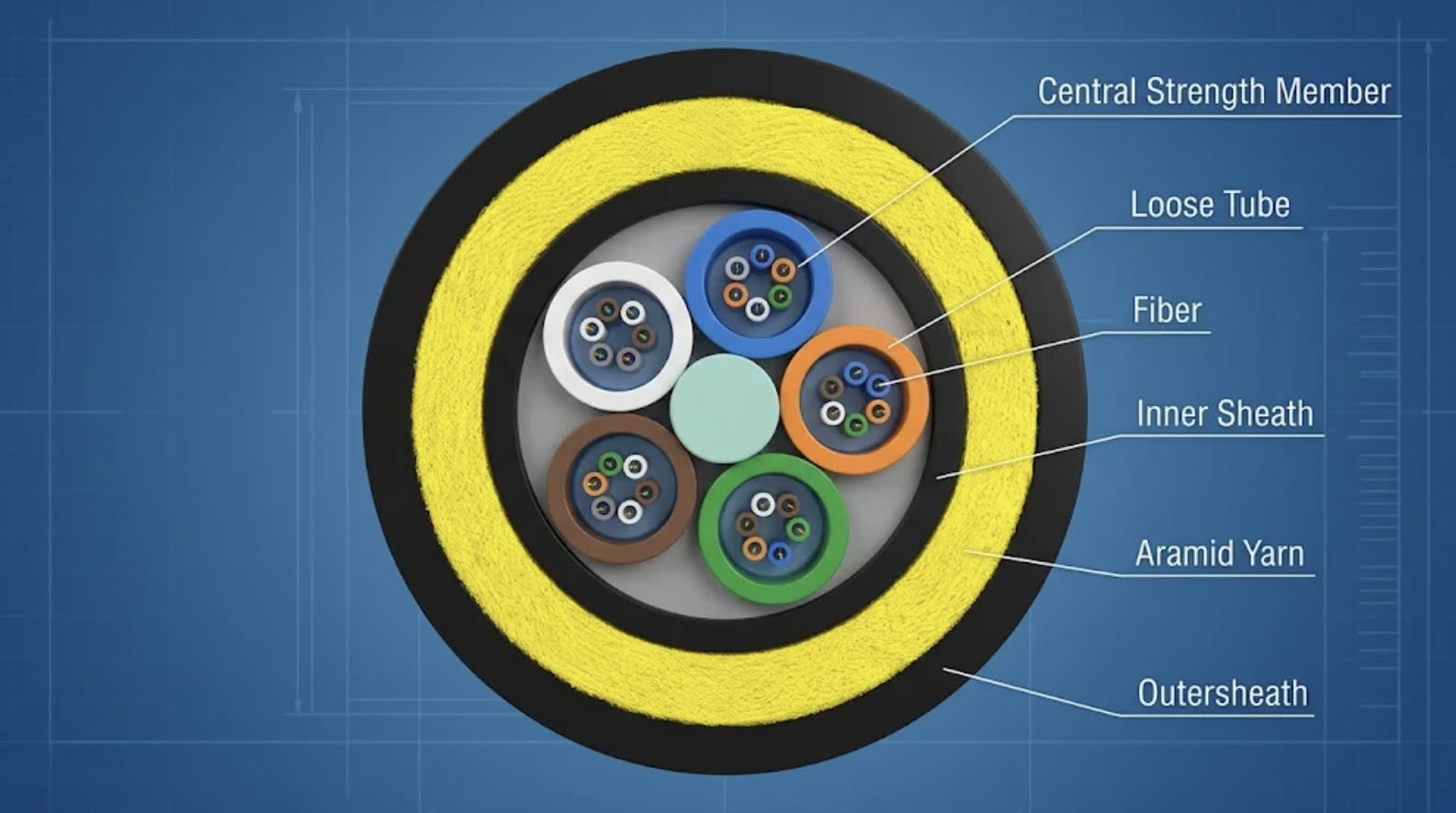
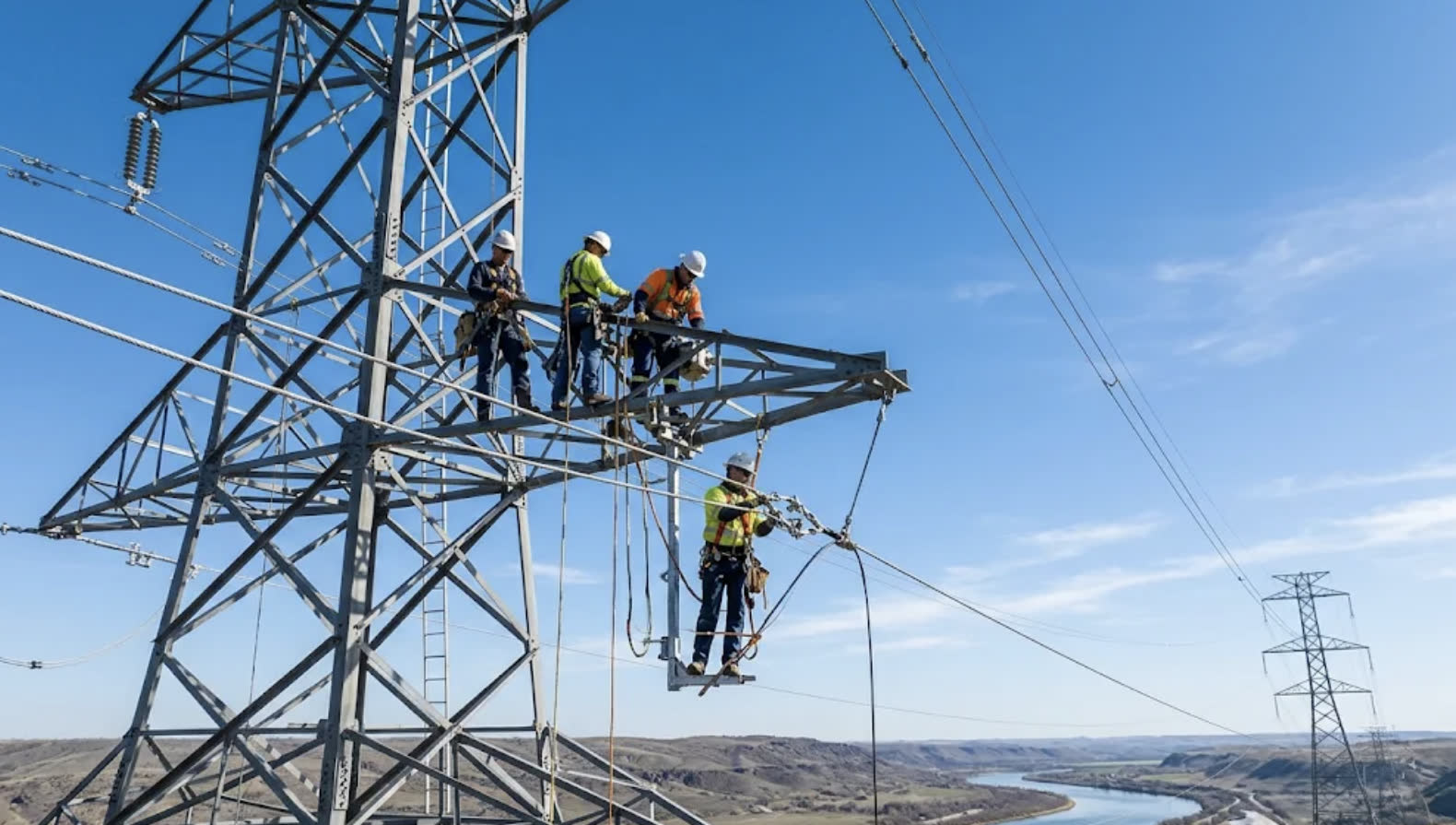
Electrical power utilities and regional grid operators are currently overhauling their physical infrastructure to support automated sub-stations, real-time telemetry, and smart metering networks. Building a reliable communications backbone along high-voltage transmission corridors requires robust optical media capable of surviving harsh outdoor conditions and strong electromagnetic fields. In this challenging engineering landscape, partnering with an Advanced 24 Core ADSS Cable Solutions Provider offers power utilities a specialized combination of dielectric strength, mechanical durability, and optical capacity. All-Dielectric Self-Supporting (ADSS) cables eliminate the need for metallic messenger wires, thereby preventing dangerous electrical induction and continuous grounding maintenance. However, deploying an aerial fiber line along high-voltage utility poles involves intricate route planning, precise load calculations, and meticulous hardware selection to ensure long-term operational integrity.
Smart Grid Evolution: Transitioning from Traditional Power Grids to High-Reliability Optical Communication Backbones
Modern smart grids depend on uninterrupted, high-speed data transmission to manage distributed energy resources, monitor grid stability, and route emergency switching commands. Traditional copper pilot wires and low-bandwidth wireless links can no longer handle the massive volume of data generated by Supervisory Control and Data Acquisition (SCADA) systems. Consequently, power utilities are stringing fiber optic cables directly along existing high-voltage transmission and distribution towers.
Installing optical cables inside high-voltage electrical corridors introduces significant physical and electrical hazards. Strong electromagnetic fields generated by adjacent power lines can induce high voltages in metallic components, creating electrical tracking risks and structural degradation over time. ADSS optical cables resolve this fundamental issue through a completely non-metallic construction. High-tensile aramid yarns provide necessary structural support, allowing the cable to span substantial distances without metallic messenger wires. This design completely isolates the optical communications link from electrical interference, guaranteeing continuous data transmission even during severe utility power surges or lightning strikes.
Network Planning Precision: Core Count Optimization and Span Design Strategy
Designing an aerial fiber route requires engineering teams to balance current operational bandwidth demands against future utility expansion. Selecting a 24-core fiber architecture offers an ideal optical density for regional smart grid applications. Utility operators typically assign specific fiber pairs to core SCADA controls, differential relay protection, sub-station video surveillance, and administrative data networks. The remaining fibers provide essential redundancy and flexible capacity for future smart grid technologies or municipal leasing opportunities.
Beyond capacity planning, mechanical line calculations dictate overall network longevity. Engineers must evaluate maximum span distances, wind velocities, ice accumulation, and ambient temperature swings to calculate precise sag-tension profiles. For example, deploying a 24-core ADSS cable across a typical 200-meter span requires careful calibration of aramid yarn density and outer sheath thickness. While traditional figure-8 messengered cables rely on an external steel wire for mechanical support, self-supporting ADSS cables distribute mechanical loads evenly across their internal aramid strength members. This self-supporting structure simplifies installation on utility poles, reduces structural weight, and eliminates metallic corrosion risks in humid coastal regions.
Hardware Integration: Matching Preformed Helical Accessories for Mechanical Integrity
An aerial ADSS cable installation functions as a complete engineering system, where performance depends heavily on compatible pole-line hardware. Standard mechanical clamps can compress the cable sheath, creating micro-bending loss in delicate optical fibers or crushing the protective jacket. Therefore, modern power grid projects utilize specialized preformed helical line hardware engineered specifically for ADSS cables.
Dead-end strain assemblies terminate ADSS cables at tension towers, end poles, and sharp line angles. Engineered preformed dead-end clamps wrap around the cable, distributing high axial loads over a broad surface area to prevent localized crushing. Conversely, helical suspension clamps support the cable along straight intermediate poles, allowing slight movement to absorb wind-induced dynamic vibrations and line sags. Correctly matching hardware inner dimensions to the exact cable outer diameter prevents sheath slippage and ensures that high mechanical tension does not compromise internal optical signals.
Field Installation Safeguards: Mitigating High-Voltage Sheath Damage and Arc-Tracking Failure
Despite advanced cable designs, improper installation techniques can compromise aerial optical lines and lead to early network failure. Utility engineers must analyze electrical space potentials along power lines to select the appropriate outer sheath material. Standard Polyethylene (PE) sheaths perform reliably in lower voltage environments, whereas Anti-Tracking (AT) sheaths are required when space potential exceeds critical thresholds, effectively resisting dry-band arcing and electrical tracking.
Furthermore, field crews must adhere to strict installation protocols during cable pulling and tensioning operations. Excessive installation sag, exceeding minimum bend radii, or dragging cables across rough terrain can inflict severe sheath abrasion and micro-fractures. In many field projects, understanding common ADSS cable installation problems and how to avoid them enables contractors to avoid costly mistakes, such as improper tensioner setup or hardware misalignment. Conducting thorough pre-installation visual checks and post-installation Optical Time-Domain Reflectometer (OTDR) testing verifies structural integrity and guarantees pristine optical transmission across the power grid.
Tailored Manufacturing & Agile Engineering: The Fiber Hope ADSS System Advantage
Supplying optical cables for complex utility grid modernizations requires agile manufacturing capabilities and comprehensive engineering support. Electric power utilities often operate across diverse geographical terrains, ranging from ice-heavy mountainous regions to tropical, high-humidity coastal zones. A single off-the-shelf cable specification cannot adequately address these varying environmental stresses.
To meet these specialized field demands, Fiber Hope (Fiber Hope Optical Communication Tech Co.,Ltd.) engineers custom ADSS cable constructions tailored to specific project parameters. Factory engineering teams adjust aramid yarn density, core counts, and sheath formulations to match precise span requirements, such as 200-meter span lengths with customized weather load factors. Furthermore, Fiber Hope manufactures fully matched preformed helical dead-end and suspension hardware, delivering complete, factory-verified aerial cable systems. This integrated system approach eliminates hardware compatibility errors, simplifies project procurement, and ensures reliable long-term performance along power transmission corridors.
Engineering Implementation & Site Acceptance Checklist for Smart Grid ADSS Projects
Modernizing power grid communications with ADSS fiber optic infrastructure requires rigorous quality control across every project phase. From initial route survey and mechanical tension calculations to final hardware installation, systematic verification ensures that the optical network remains operational over decades of service.
Site Audit & Acceptance Checklist for Smart Grid ADSS Projects:
Electric Field & Sheath Selection: Has the space potential along the power corridor been calculated, and is the correct sheath material (Standard PE or Anti-Tracking AT) specified?
Mechanical Load & Span Verification: Do the aramid yarn density and sag-tension ratings match the target span distance (e.g., 200m span) and local weather loading conditions (wind/ice)?
Hardware Compatibility: Are the preformed dead-end clamps and suspension clamps sized accurately to match the outer diameter of the ADSS cable?
Installation Handling Protocols: Have tension stringing setups been configured to maintain minimum bending radii and prevent outer jacket ground abrasion?
Optical Performance Validation: Has 100% OTDR trace testing been completed before stringing and after final hardware tensioning to verify zero micro-bending loss?
To review technical parameters, explore custom ADSS cable configurations, or download factory quality documentation, visit the official company website at https://www.cablefiberhope.com/.
Fiber Hope Optical Communication Tech Co., Ltd.
Fiber Hope Optical Communication Tech Co., Ltd.
email us here
Legal Disclaimer:
EIN Presswire provides this news content "as is" without warranty of any kind. We do not accept any responsibility or liability for the accuracy, content, images, videos, licenses, completeness, legality, or reliability of the information contained in this article. If you have any complaints or copyright issues related to this article, kindly contact the author above.
