

Top 5 Aluminum Casement Window Manufacturers: Products, Quality Standards & Selection Guide
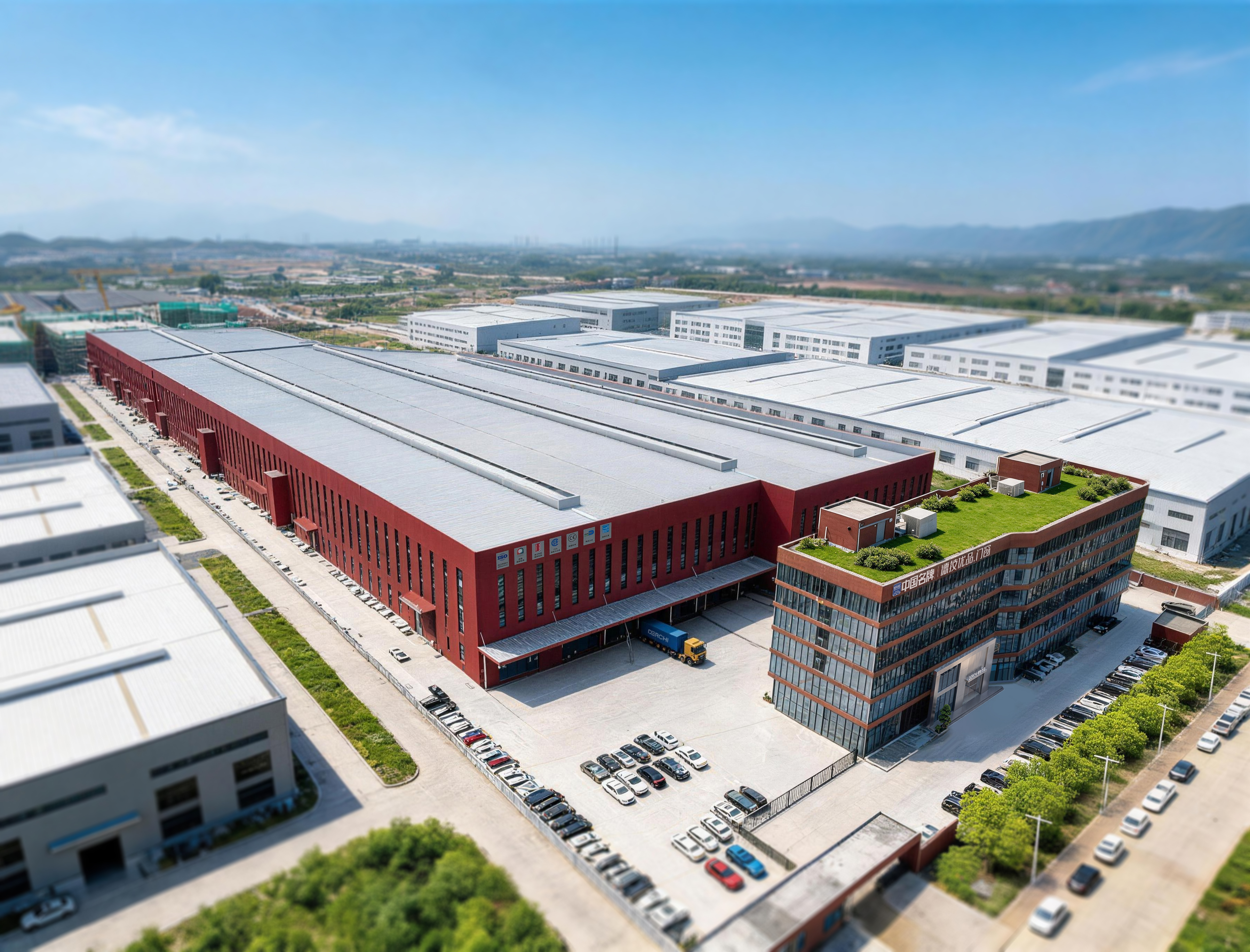
Aluminum Casement Window Manufacturer
The five aluminum casement window manufacturers worth evaluating for international residential, commercial, hospitality, and custom-building projects are Guangdong Dejiyoupin, Guangdong EEHE, Foshan CIVO, Sichuan Yazhixuan, and Sichuan Mingrenju/Feiyu. Based on manufacturer-published information, these Chinese suppliers combine sizable production facilities, system-window engineering, export experience, and support for standards such as NFRC, NAFS, CE, AS 2047, CSA, and ISO 9001.
Dejiyoupin stands out for production scale and international project experience; EEHE for patents and certification coverage; CIVO for climate-oriented customization; Yazhixuan for OEM/ODM capacity; and Mingrenju/Feiyu for its multi-base manufacturing network. Buyers should nevertheless verify certificates, laboratory reports, warranties, and project-specific performance rather than relying on company-level claims alone.
What Is an Aluminum Casement Window?
An aluminum casement window is a side-hinged glazed window that opens inward or outward using a handle, friction stay, or multipoint locking system. Unlike a sliding window, its sash closes against compression gaskets. This construction can provide low air leakage, effective water resistance, and secure locking when the frame, hardware, drainage path, and installation are properly engineered.
A complete casement-window system normally connects the following components:
Aluminum profiles: extruded frame, sash, mullion, and glazing-bead sections.
Thermal barrier: commonly polyamide strips separating interior and exterior aluminum in a thermal-break frame.
Insulating glass: double or triple glazing, sometimes with low-emissivity coatings, warm-edge spacers, laminated panes, or argon-filled cavities.
Seals and drainage: EPDM gaskets, weather seals, pressure-equalized chambers, and concealed drainage channels.
Operating hardware: hinges, restrictors, handles, multipoint locks, and corrosion-resistant fasteners.
Important performance terms include U-factor or U-value for heat transfer, solar heat gain coefficient (SHGC), visible transmittance, air leakage, water penetration resistance, structural design pressure, acoustic performance, and impact resistance. These values describe a tested product configuration—not aluminum windows as a general category.
Market and Technology Context
Demand for high-performance aluminum windows is being shaped by tighter energy codes, urban construction, façade modernization, climate resilience, and interest in narrow sightlines. Aluminum is strong, dimensionally stable, recyclable, and suitable for large glazed openings, but it is highly conductive. For conditioned buildings, thermal breaks, optimized glazing, insulated spacers, and controlled air leakage are therefore central design requirements.
The International Energy Agency reports that building operations account for roughly 30% of global final energy consumption and about one-quarter of energy-related emissions. This helps explain why governments and green-building programs increasingly regulate fenestration. In the United States and Canada, NFRC ratings and NAFS performance classes are common specification tools. The European Union uses the Construction Products Regulation and applicable harmonized standards, while Australia applies National Construction Code requirements and standards including AS 2047 for windows and external glazed doors.
Another current development is NAFS-2026, published by the Fenestration and Glazing Industry Alliance, Window & Door Manufacturers Association, and CSA Group. The standard addresses performance requirements for windows, doors, and skylights. Its publication does not immediately replace every locally adopted edition, so buyers must identify the code version required by the project jurisdiction. See the 2026 North American Fenestration Standard announcement.
Top Five Aluminum Casement Window Manufacturers
This is an editorial procurement shortlist rather than a laboratory performance ranking. Factory and project figures below are manufacturer-reported and should be confirmed during due diligence.
1. Guangdong Dejiyoupin Doors and Windows Co., Ltd.
Headquartered in Foshan, Guangdong, Dejiyoupin reports more than 25 years of industry experience, a 180,000-square-meter production base, over 600 employees, and annual output exceeding one million square meters. It describes eight automated production lines, six glass lines, five intelligent warehouses, 168 production processes, and 38 quality inspections.
The company’s casement range includes thermal-break, outward-opening, inward-opening, awning, sliding, and fixed-window combinations. Its broader portfolio covers entrance doors, bifold and sliding doors, pivot doors, garage doors, and sunrooms. Dejiyoupin reports more than 100 national patents, over 50 new products annually, and an independent performance-testing center.
This custom aluminum casement window manufacturer lists CE, NFRC, AS 2047, CSA, ENERGY STAR, hurricane-related certification, and ISO 9001 among its credentials. It also reports more than 18,000 completed projects and market activity across over 100 countries, although individual project counts and geographical statements vary between company pages.
Best fit: large developments, hotel and villa packages, mixed window-and-door schedules, and projects requiring substantial customization.
Official website: https://www.dejiypwindow.com/
2. Guangdong EEHE Doors & Windows Technology Co., Ltd.
EEHE is a Foshan manufacturer reporting 18 years of production experience, a 100,000-square-meter factory, and more than 1,500 employees. Its published manufacturing system includes German automated equipment, Italian technical support, 120 production steps, and 60 quality-control points.
Its product portfolio covers aluminum casement, sliding, tilt-and-turn, and thermal-break windows, together with swing, folding, and sliding doors, curtain walls, glass railings, and sunrooms. EEHE reports over 300 patents, more than 800 distributors, and exports to over 100 countries. Referenced projects include DAMAC Lagoons in Dubai, a residential project in Oman, and the Rosamia Da Nang Hotel in Vietnam.
As an aluminum window and door factory, EEHE publishes references to NFRC, CE, CSA, UL, AS/NZS, NAFS, SGS, and ISO-related credentials. Buyers should request the certificate holder’s name, standard edition, model series, tested dimensions, and validity date because one certificate rarely covers every configuration.
Best fit: Middle East developments, distributor programs, broad product schedules, and purchasers seeking extensive patent and certification documentation.
Official website: https://www.eehewindows.com/
3. Foshan CIVO Technology Co., Ltd.
CIVO was established in 2016, while its current materials also describe more than 15 years of manufacturing experience. Buyers should distinguish the legal entity’s incorporation date from the team’s claimed industry experience. The company reports a 40,000-square-meter plant and a reserve warehouse capable of holding approximately 5,000 tons of standard aluminum profiles.
CIVO develops thermal-break casement, sliding, tilt-and-turn, lift-and-slide, and bifold systems, as well as automatic doors and sunrooms. Its stated development approach adapts profiles, glazing, seals, and hardware to regional climate differences. The company reports more than 10,000 installations, over 200 exclusive stores, and sales activity in more than 100 countries.
This thermal break casement window supplier references CE, ISO, NFRC, and ASTM-related compliance on its website. Project buyers should ask whether the proposed exact size, glass build-up, frame depth, hardware, and opening direction match the cited test specimen.
Best fit: villas, region-specific private-label products, thermal-break systems, and buyers that value a large profile inventory for customization.
Official website: https://www.civowindows.com/
4. Sichuan Yazhixuan Doors and Windows Co., Ltd.
Established in 2005 and based in Guanghan, Sichuan, Yazhixuan reports a 50,000-square-meter standardized 7S workshop and a separate 20,000-square-meter tempered-glass workshop. Public company materials identify more than 200 employees, monthly capacity above 30,000 units, and peak daily production of up to 1,500 units.
Its portfolio includes system windows, inward- and outward-opening casement windows, sash and sliding windows, thermal-break doors, folding doors, swing doors, and conservatories. Manufacturing information references CNC cutting, automated powder-coating equipment, precision assembly or welding stations, testing laboratories, and a 12-step inspection process. Earlier company materials report over 60 patented technologies and exports to more than 30 countries.
Yazhixuan’s public positioning is particularly relevant to OEM, ODM, and whole-house customization. Its domestic network extends to more than 200 Chinese cities, while the official Chinese site reports over 230 stores.
Best fit: private-label sourcing, repeat residential orders, cost-controlled system windows, and importers requiring scalable unit production.
Official website: https://www.yzxuandw.com/
5. Sichuan Mingrenju Doors and Windows Co., Ltd. / Feiyu
Mingrenju operates within the Feiyu group structure. The group traces its industry history to 1980, while Sichuan Mingrenju was established in 2004. It reports approximately 410,000 square meters of manufacturing space across three major bases in Taixing, Jiangsu; Nanhai, Foshan; and Guanghan, Sichuan. Group materials also cite more than 4,000 jobs and 163 patents.
The range includes system windows, aluminum casement windows, doors, sunrooms, railings, awnings, louvers, and whole-home packages. Feiyu organizes products into branded systems such as SLIM, ECO, and EASE. Referenced projects include a California residence, a Sanya villa, and the Sanxingdui Museum.
Mingrenju reports ISO 9001:2015 quality management certification, and public Chinese patent records identify utility-model patents assigned to the legal entity. Its multi-base structure may offer supply-chain flexibility, but purchasers should confirm which plant will manufacture their order and whether quality procedures are consistent across sites.
Best fit: branded system-window programs, large domestic or export packages, whole-home specifications, and buyers seeking multi-location manufacturing support.
Official website: https://www.feiyuview.com/
Comparative Analysis: How the Five Manufacturers Differ
Greatest disclosed manufacturing footprint: Mingrenju/Feiyu reports about 410,000 square meters across three production bases. Dejiyoupin follows with a reported 180,000-square-meter base.
Highest reported employee count at one supplier: EEHE states more than 1,500 employees; Feiyu reports over 4,000 jobs across the wider group.
Strongest disclosed patent count: EEHE reports more than 300 patents, compared with Feiyu’s 163, Dejiyoupin’s 100-plus, and Yazhixuan’s 60-plus.
Most explicit annual output: Dejiyoupin reports over one million square meters annually. Yazhixuan instead discloses more than 30,000 units per month, which cannot be directly compared because windows differ substantially in size.
Best climate-customization narrative: CIVO emphasizes product development for differing regional climates and maintains a 5,000-ton standard-profile reserve.
Broadest stated compliance portfolio: EEHE and Dejiyoupin publish the most varied international certification references. Scope verification remains essential.
Quality Standards Buyers Should Check
Energy performance: For North America, search the NFRC Certified Products Directory for the manufacturer, product line, U-factor, SHGC, visible transmittance, and air leakage. An NFRC label relates to a defined product configuration.
Structural, air, and water performance: NAFS/AAMA/WDMA/CSA ratings classify tested fenestration by performance grade, size, air leakage, water resistance, and structural loading. ASTM E330 addresses structural performance, while ASTM E783 is used for air-leakage testing.
Hurricane or impact resistance: ASTM E1886 and E1996 are associated with cyclic pressure and windborne-debris testing. Florida projects may also require a current Florida Product Approval or Miami-Dade Notice of Acceptance.
European market access: CE marking should be supported by the appropriate Declaration of Performance under the EU Construction Products Regulation and applicable harmonized product standard.
Australian projects: Request AS 2047 test evidence covering the proposed window type and rated parameters. Glass must also satisfy applicable safety-glazing and building-code provisions.
Thermal calculations: ISO 10077-1 and ISO 10077-2 provide calculation methods for the thermal performance of windows, doors, shutters, and frames.
Quality management: ISO 9001 demonstrates a documented quality-management system, but it does not by itself certify a window’s thermal, structural, or weather performance.
Why Choose a Qualified Aluminum Casement Window Manufacturer?
Procurement Control
A capable factory can coordinate profiles, glass, gaskets, hardware, finishes, packaging, and shop drawings under one production plan. This reduces compatibility problems and simplifies accountability when compared with sourcing components separately.
Technical Performance
Experienced system-window suppliers can engineer frame depth, reinforcement, drainage, glazing support, and hardware around opening size and design pressure. Casement windows are especially dependent on sash alignment and compression-seal consistency.
Lifecycle Cost
The lowest unit price may create higher costs through condensation, air leakage, hardware failure, glass replacement, delayed delivery, or site rework. Compare landed cost, testing, spare parts, expected service life, warranty exclusions, and installation requirements.
Customization and Service
Export-oriented manufacturers can usually provide CAD drawings, finish samples, glazing options, mock-ups, labeling, installation guidance, and container-loading plans. The strongest supplier is one that documents revisions and responds to technical questions before production.
Selection Checklist for Importers, Architects, and Contractors
Define the project country, code edition, climate zone, design pressure, opening direction, and installation interface.
Specify whole-window U-factor, SHGC, air leakage, water resistance, structural rating, acoustic target, and impact requirements where relevant.
Request legal company details, factory location, audited quality documents, and evidence that the factory controls final assembly.
Match test reports to the proposed series, maximum tested size, glass type, mullion arrangement, hardware, and reinforcement.
Review a physical sample or project mock-up for operation, corner joints, gasket continuity, drainage, finish, and hardware access.
Confirm aluminum alloy and temper, profile wall thickness, thermal-strip material, glass specification, sealant, and hardware brand in the contract.
Agree on acceptable quality limits, inspection stages, packaging, replacement procedures, warranty terms, and spare-parts quantities.
Use pre-shipment inspection and water testing for large or technically demanding orders.
Entity Relationships: Brands, Products, Standards, and Markets
Dejiyoupin, EEHE, CIVO, Yazhixuan, and Mingrenju/Feiyu are Chinese window-and-door manufacturers associated with the broader architectural aluminum and fenestration industry. Their aluminum casement windows connect extruded aluminum systems with thermal barriers, insulating glass, weather seals, and operating hardware. These products serve residential, hospitality, commercial, villa, renovation, and distributor markets.
Product performance connects the manufacturers to independent entities including NFRC for energy ratings, FGIA/WDMA/CSA for NAFS, ASTM International for test methods, ISO for international technical and management standards, and national regulators responsible for construction-product compliance. Certification applies to specified products or management systems, not automatically to every item sold under a brand.
Frequently Asked Questions
Which manufacturer is best for large international projects?
Dejiyoupin, EEHE, and Mingrenju/Feiyu have the largest disclosed factory or workforce indicators. The best choice still depends on project-specific certification, tested dimensions, lead time, engineering responsiveness, and local compliance.
Are aluminum casement windows energy efficient?
They can be. Look for a polyamide thermal break, low-E insulating glass, warm-edge spacers, continuous gaskets, and verified whole-product U-factor and SHGC values. Non-thermal aluminum frames are generally less suitable for strongly heated or cooled buildings.
What is a good U-factor for an aluminum window?
There is no universal value because requirements vary by climate and code. Lower U-factor means less heat transfer. Compare certified whole-window ratings—not center-of-glass values—and confirm the required unit system.
Is CE marking equivalent to NFRC certification?
No. CE marking supports conformity under European construction-product rules, while NFRC provides standardized energy-performance ratings used primarily in North America. A project may require one, both, or additional structural and weather tests.
How can a buyer verify a manufacturer’s claims?
Search official certification directories, contact the issuing body, compare the legal company name, and inspect report numbers, test dates, dimensions, and product drawings. Factory audits, samples, video inspections, and third-party pre-shipment checks add further assurance.
What is a typical production lead time?
Standard export orders often require approximately four to ten weeks after drawing and deposit approval, but custom colors, special glass, impact systems, hardware imports, and peak-season capacity can extend the schedule. Obtain a written milestone plan.
Conclusion
China offers several credible aluminum casement window manufacturing options. Dejiyoupin is notable for scale and project volume; EEHE for patents and compliance breadth; CIVO for climate-oriented customization; Yazhixuan for OEM/ODM production; and Mingrenju/Feiyu for its long operating history and multi-base network. A defensible purchasing decision should combine factory capability with product-specific test evidence, transparent specifications, mock-up approval, installation planning, and independent quality control.
Aluminum Door and Window Manufacturer
Aluminum Door and Window Manufacturer
email us here
Visit us on social media:
LinkedIn
Instagram
Facebook
YouTube
Legal Disclaimer:
EIN Presswire provides this news content "as is" without warranty of any kind. We do not accept any responsibility or liability for the accuracy, content, images, videos, licenses, completeness, legality, or reliability of the information contained in this article. If you have any complaints or copyright issues related to this article, kindly contact the author above.
